“Liberty, then, belongs only to those who have the gift of reason or intelligence. Considered as to its nature, it is the faculty of choosing means fitted for the end proposed, for he is master of his actions who can choose one thing out of many” -Pope Leo XIII Libertas
The Philosophy of Metaphysics seeks to bring understanding to the human condition as beings that are be-ing. As such, we go beyond the senses and physical attributes to human nature, the intellect, and the will.
Being, in both senses of the word, contains properties that we call the transcendentals. These properties exist within all beings and are integral to the thought. Every being contains these properties which are as follows:
- Unity
- Truth
- Goodness
- Beauty
Since these properties belong to every existence, we can say that; every being is one, every being is true, every being is good, and every being is beautiful.
The concept of freedom or liberty deals with the thoughts or actions of individuals and the ability to use/have them. Thus for the remainder of this article we will be focusing on two of the transcendentals that influence these; truth and goodness.
Truth of thought
As every being is true, there necessarily exists an obligation on that being to conform to that which IS true. Truth in relation to being deals principally with the intellect. The intellect exists outside of the mind, and gives us the power to know.
Truth is fundamentally the relation of the intellect to a thing, an existent. Our nominal idea of truth in the modern world is whatever we make it to be, “my truth” or “your truth.” But transcendental truth is all encompassing, it pertains to the objective order of things for it is the conforming of our thought to that which actually exists in reality; real Truth is always “our truth” it is the way things really are, not a warped denial of what is.
Coming to an understanding of (big T) Truth, brings us back to the notion of freedom/liberty. A being is only free in so far as it has the ability to seek and to know Truth. Once our intellect grasps that which is in reality, we must then conform ourselves to what is real and true, this is our obligation.
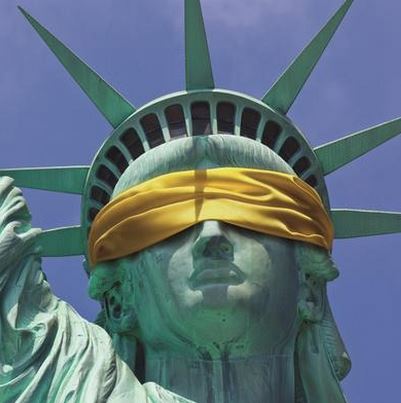
We cease being free when we deny this relation between our intellect and reality. When “our truth” is denied for “my truth” it is like placing a blindfold over the objectivity of reality and does not allow the knower to see what is then good and beautiful.
Goodness of action
Now that we understand that the intellect is the power that enables a being to know and that it is used to conform ourselves to reality, we move on to the will.
The will is that power that enables a being to act on what it knows. Thus it follows logically that since the will is a doing power and the intellect is a knowing power, we can say the will is blind without truth.
The less we know of Truth, that is, the more we deny “our truth” in favor of “my truth,” the less we will be able to do what is good.
It is understood that we, as rational beings, harbor free will. But our will is only free in as much as we can choose to do what we think is good (for who would choose what they know to be bad?). This stresses the importance of knowing Truth. Without knowing Truth we cannot know what is truly good to do and what is the privation of it, evil.
The will becomes less free the less Truth we know. Our freedom and liberty depend on not only conforming our minds to what is in reality but in doing what is right and good through our actions because of our knowledge of what is true.
The modern notion of freedom or liberty is better defined as individual autonomy; the ability to do or think whatever we so choose for no more reason than because we want to.
As we see though, real liberty is found in conforming our thoughts and actions with that which is objectively true and good. It is our obligation to seek the Truth and to do good because of the properties we have as rational beings.
We must remove the blindfold we place over ourselves and return to that which gives foundation to our thoughts and actions. For how could we ever hope to think and do what is true and good if we deny their very existence?

 A Holy Legacy